Saturday, October 30, 2010

Beaver Creek and Ona Beach State Park Planning

Recently there was a public meeting of staff from Oregon State Parks and interested citizens on the early stages of developing master plans for the Beaver Creek and Ona Beach State Parks.  The overall process, vision, and timing for the master plans was presented and comments from citizens were listened to and recorded.  There were many comments about access to the parks, need for careful consideration of resources and possible overuse of the parks, especially Beaver Creek, and the need to engage the public in the planning process.  
State Parks has a well-developed planning process that is used for all state parks.  The public is invited to participate through several channels.  A relatively new initiative is called Centennial Horizon which includes long-term planning for all of Oregon’s state parks.  Further information can be seen in the planning section of the State Parks website.  There will be a Beaver Creek and Ona master plan website in a month or two, and in the meanwhile you can send input and comments to Kathy.Schutt@state.or.us or contact the State Parks office in Newport at 541-265-8179.
I have found the staff at State parks to be receptive and responsive to comments by citizens.  If you have a concern or have some words of praise about their planning and activities, let them know.  A comment was made at the recent planning meeting that suggested that State Parks is not responsive to public input and hides their actions, because they did not have enough widely publicized public meetings and open forums about Beaver Creek and Ona Beach.  State parks can be reached any time during business hours and the staff are easy to talk to.  Get involved and don’t wait for an invitation to a public meeting.  
Some interesting planning considerations were introduced at the recent meeting.  The planning process looks out over the next 100 years, as included in the Centennial Horizon.  Master plans will be developed for the Beaver Creek Park and for Ona Beach Park, which are separate but adjacent state natural area and state park.  The state natural area emphasizes wetland and riparian conservation, trails, and interpretation, with only very limited development.  The state park could provide more typical coastal park uses, including a possible low impact campground near the beach.  There will be a complete assessment of resource sensitivity and quality recreation needs.  Resources include habitats, plant communities, wetlands and riparian habitats, hazards, water features, topography, soils, historic and prehistoric culture, and scenic features.  Any needed development in Ona Beach Park will be placed in low quality areas, with buffers to neighbors and higher quality resources. 
Several citizens expressed concern about the possibility for “loving nature to death” in Beaver Creek Park and there was discussion of how to limit public access.  This topic will continue to be an important consideration for Beaver Creek Park.  Real answers to this concern will come from careful observation of public behavior in the park in coming years and using this data in planning further park actions.  One suggestion was that access and trails to Beaver Creek Park should be limited at first and then slowly opened up through time to conserve its unique qualities from human impact.
What do you think about planning for Beaver Creek and Ona Beach Parks?  Let State Parks know your views.  The process is open and free.
Posted by michael  

Wednesday, October 27, 2010

The Potency Of The Marsh

The marsh is part of nature, an open space that is controlled by natural forces and laws.  As such, the marsh and all other open spaces are displays of the wisdom of nature.  When we see open spaces, our hearts emerge beyond our minds and we experience well being and wonder.  In other places where nature is not so open and we exert human control, we experience the force of our thoughts and fixations, covering over our links with nature.  We do not manage nature.  We manage humans in nature.  So in our lives there is this dynamic between open nature and human engineering.  We claim control and dominion over nature and call ourselves good stewards of the land.  How can we control nature, that is so much more cohesive and potent than our wandering consciousness?  We are part of nature and our control is only illusory, allowed by open nature.  We are separate from nature only in our self-minds.
So people tell me that you can “love nature to death”.  I see that it is more the case that nature loves us to death.  We are born and die in vast nature.  Nature is not born or dying, only moving like a stream in its bed to the ocean.  In places where we exert our human logic, science, objectification, and machines such as cities, towns, villages, natural resource extractions (farms, fishing, timber, and mining), and wars, we hide nature’s potency and call it human civilization and domination.  During “time off”, we commune with nature in open spaces and enjoy the lasting benefits of “free” air, water, and care-free thoughts and emotions.  Nature is an expression of the vast potency of life that is beyond our abilities to understand and predict.  When we set aside lands and waters as open space, we allow our true nature to exist in harmony with human activity.  
Walk along a path or road near open space.  There is often trash along the path.  You may have a gut reaction of disgust, asking who would throw away that trash, there?  You separate yourself from the trash and look up to the beauty of open space.  But are you separate?  That person who trashed your beautiful space is your relative, in your human family.  Why do you reject them?  The trash is part of open space too.  We can learn to see how everything is part of us.  We can teach each other the value of accepting what is, caring for each other in ways that support nature, and not fighting like children in the school yard.  Someone threw the trash away on the path because they were in a trash mood, having a trash emotion.  By giving them open space, they can brighten their mood and have the emotions of love and compassion.  By turning our minds to open space, we can guide each other and teach the values of air, water, health, and peace, things that cannot and are not bought and sold in the human market places.  
Posted by michael 

Sunday, October 24, 2010

Planning Meeting For Beaver Creek State Natural Area


Members of the public will have the opportunity to comment on the Beaver Creek State Natural Area/Ona Beach State Park master plan during a meeting at 6 p.m. on Tuesday, Oct. 26, at the Central Lincoln People Utility District meeting room, 2119 N. Coast Highway in Newport.

Posted by michael

Friday, October 15, 2010

Clearly Apparent Yet Not Existent

The creek flows through the marsh and out into the ocean, surrounded and suffused by space.  There are many examples here of what is clearly apparent yet not existent.  We can call these examples metaphors and symbols for the nature of things.  We objectify our existence, separating ourselves from other objects and beings and declare us and them.  Objects and subjects are like a creek in its bed, wind in space, waves on water, reflections in mirrors, clouds in sky, and dreams in sleep.  Objects and subjects are illusory as they have no independent, lasting self-nature and are interdependent in a web of cause and effect.  This very dependence is the appearance that we call object and make philosophy and science with.  Since we are not omniscient, we are not able to see all of these causes and conditions.  We believe strongly in the independence of objects, as if they were separate and distinguishable, and say that they have self-nature.  We especially have a strong sense of ego; that we are independent, with self-will. 
The ego is like the emperor in the story of “The Emperor’s New Clothes”.  Two (duality) tailors (illusion) weave clothes (objects) for the emperor (ego) that are so light and fine (desirable) as to appear invisible (no cause and effect), especially to anyone too stupid or incompetent (shame) to appreciate their quality.  A child (original nature) eventually saw the emperor in his new clothes and recognized that he was naked.  But the emperor could not acknowledge this nakedness (awareness) and continued on, walking through the streets (the world) with the illusion of his new clothes.        
How deluded we are.  By maintaining this separation of subjective self and objective other, we fail to see what is.  We grasp on to solidity of self and objects as if they did not constantly change and depend on each other.  Even if we recognize change, we do not believe that it applies to our precious self and others.  We are afraid when objects change, as this represents loss and gain of something desirable or abhorrent.  We fail to see that birth, life, and death are a continuum, with the magical properties of spontaneous appearance and disappearance of consciousness that are dependent upon subject and objects.  This cycle rests upon unchanging awareness, which we sense but cannot see.  We are this awareness, which gives rise to the display of subjects and objects; just like waves forming and dissolving into water, reflections arising and disappearing in mirrors, clouds forming and dissolving into sky, and dreams appearing and disappearing in sleep.  The water, mirrors, sky, and sleep are metaphors for awareness and are not changed by this display.  Recognizing the illusory nature of display, we can return to our nature and be complete. 


When we are not attached to our conclusions, concepts, and training about existence, then we are free to experience our nature in the vast ocean of space which is mind.  We easily move through the causes and conditions that surround us.  Then we become what we are, omniscient awareness in the unending web of interdependence.  Everything is as it should be in the unending dance of change.  Relax and enjoy every emotion, thought, and perception as the illusions that they are, without the anxiety of grasping and fixation.


Posted by michael

Sunday, October 10, 2010

Beaver Creek Art Show

Scenes from the opening night of the art show at the Newport Visual Arts Center, Upstairs Gallery.  Paintings, ceramics, photographs, pastels, and sculpture are on display through October, 2010.  Five artists, Sandy Roumagoux, Liisa Rahkonen, Nancy Jane Reid, Jackie Niemi, and Michael Davis show works inspired by the Beaver Creek State Natural Area.  The natural mind of wildness is invoked in the gallery, which is filled with light and life in the colors of marsh.


Reflections reveal our nature, as light is returned to us from objects, waking and dreaming;  all are mirrors.  We name these reflections perception, emotion, and thought.  We forget that everything is clearly apparent, but not existent.  We objectify that which is simply reflection and call it the world.  At the marsh, we are real and bask in the glow of the singularity that is our love for all beings and places.  We are alive and know it in our hearts.

Posted by michael

Sunday, October 3, 2010

Patient Watching

USFWS public domain

Thirty years ago, I had a conversation with Range Bayer about what he calls patient watching.  We talked about the interesting and different behavior that can be seen when observations of animals are made over a relatively long period of time.  Our conversation had a profound effect on me.  Going on to study fish behavior, I used what Range had said about patient watching.  Recently, Range and I talked about patient watching again and remembered that this method is indeed a powerful way to see the world.  Range used patient watching in his studies of great blue herons.
In classical behavior studies, the observer may watch an individual for short periods of time, generally 15 minutes or less.  This is called focal study and several individuals may be observed to gather replicate data for statistical analysis of mean individual behavior in a population.  The watching is done with an eye towards recording occurrence and duration of previously determined stereotypical behavior such as agonistic displays, feeding, and courtship.  This behavior is often collected into an ethogram and data is recorded that reinforces these conceptual frameworks. 
What happens when the observer watches an individual for an hour, or several hours, or through tidal cycles for up to 12 hours?  We no longer simply see stereotypical behavior that was preconceived.  We begin to see atypical, non-stereotypical animal behavior in the context of their environment.  We see how the individual responds to constantly fluctuating environmental conditions and in relation to other animals that may enter or exit the perception space of the focal individual.  This diversity of behavior is a new window on the animal and is a rich source of hypotheses and eventual explanatory information about how the animal behaves.  These patient watching studies are difficult, as they require a good deal of patience, sitting quietly for long periods of time while maintaining attention on the focal animal.  Try sitting and watching the same bird for an hour.  You must be comfortable, maintain attention, and make reliable notes for later reference and quantification.  This is the natural activity of one who meditates.  A great blue heron is a master of this mediation in the marsh, while looking for food and avoiding conflict with other animals.    
When we use patient watching, we choose not to look specifically for predetermined behavior, relaxing assumptions about what we might see.  We choose to openly watch for any behavior that may occur, repeatedly or infrequently, over a wide range of environmental and social conditions for the animal.  There are few, if any, patient watching behavior studies documented in the scientific literature.  I am making an effort to find these sorts of studies, as they are a unique contribution to knowledge of animal behavior and its meaning in ecology.  Patient watching studies can give the big picture for animals.
How can we use patient watching in our lives?  We can gain perspective on the events and circumstances of our lives by seeing through the lens of extended time.  By not automatically applying short-term conceptual assumptions to our observations, we can begin to see directly and sense the underlying forces that shape our actions and thoughts.  Imagine the potential power of seeing the wider field of connections among emotions, objects, people, and animals.  This may be a new source of inspiration and wealth, akin to the power of wildness to bring us contentment and well-being.  It would certainly help us discern the differences among conceptual seeing and direct seeing that often cloud our knowledge.  Maybe we would not be so quick to jump to conclusions about our world.  This could help reduce bias and prejudice.
Posted by michael 

Saturday, October 2, 2010

Park Opening Day


Opening day at the Beaver Creek State Natural Area.  On a cloudy, coastal day speakers for the dedication included:  Jean Cowen, State Representative;  Davis Moriuchi, Chair, Oregon Parks and Recreation Commission; Ted Kulongoski, Governor of Oregon; Terry Thompson, Lincoln County Commissioner; and Esther Lev, Executive Director, The Wetlands Conservancy.  Friends gathered and shared memories and aspirations.  A ribbon was cut, music from 'Coin of the Realm' enjoyed, and refreshments served.    


A big day for Beaver Creek marsh, where the people gathered and remembered the value of wetlands and wildness.  Looking forward to a bright future for Beaver Creek watershed and the plants, animals, and humans that visit and live in it.  So many people, communities, organizations, and agencies have been involved with this conservation effort, which continues forward with new acquisitions and conservation easements.  There is a heartfelt commitment to bring the legacy of wildness into the future for the benefit of all.  Thank you for this grace.

Posted by michael

Thursday, September 30, 2010

The Strange Case Of Missing Wetlands Value


Who stole the value of wetlands and when and where did this event occur?  In mythic time wetlands are regarded as important places for healing and spiritual understanding.  The garden of Eden was in a wetland surrounded by rivers in the desert.  Wetlands supplied water and food for the people through time immemorial.  Animals in wetlands supported the telling of tales, important for understanding nature.  Heron is an important messenger of the gods, bringing the connection between earth and heaven.  Frog is a symbol of birth, death, and rebirth; as she goes through changes in form, associated with wetland ponds and streams.  Many other animals and plants supply food, medicine, and cultural context for the people. 

Then along came science and the objective world; powerful conceptual grasping.  Human consciousness moved out of mythic time and into city time, with the formation of civilizations.  Eventually written language and money were invented and the science of economics developed.  The great human marketplaces grew and the connection between myth and human thought became hidden by the power of objective thought and philosophy.  We came to see every thing and person as objects separated from us as subjects.  This separation of the world between us and them produced a lasting cultural valuation based on richer and poorer.  Endless wars ensued to constantly adjust the balance of payments and power among cultures.  
Now we are in a crisis of understanding.  Great religions developed to act as gateways to the spiritual power of nature and renewal and these only served to reinforce the sense of objectivity for the people; priests separated people from spiritual power.  The objective world simply does not explain everything.  We have experiences of hope and fear that cannot be objectified or given monetary value.  There are vast areas of our consciousness that are subject to change by outside circumstances, but are not explainable by rational thought.  We do not understand the source of consciousness with birth.  We do not understand the disappearance of consciousness with death.  These events are magic, with spontaneous appearance and disappearance; something that is not consistent with rational thought and objectivity.  We are afraid of death and will not talk or think about it.   
Yet we know that when we take a walk or paddle a boat outside with the sky above and the marsh below, that we are happy and carefree.  This experience of wildness is priceless.  In our state of well-being, we cannot defend this value in court when developers argue for draining the marsh and building new value in their banks.
Have we forgotten our heritage?  Do we not see that subject and object cannot exist without each other, inseparable.  We talk about cause and effect, but don’t believe in it when we act without care for consequences.  We are nihilists at heart, mouthing words of empty value to satisfy the objectivity gods.  This separation that we feel and that has supported the polarity of human economic culture is the source of so much suffering.  We can take responsibility for our world by seeing the interface between subject and object and remembering the spiritual connection that we have with every living being and the world we live in.  This is the ultimate value, beyond the objectification of  existence.  We can declare that wetlands have value and that we are willing to conserve them and other wildness that is vital to our well-being.   
Posted by michael

Wednesday, September 29, 2010

Value of Wetlands Vegetation

Research taking place in the large wave flume at the O.H. Hinsdale Wave Research Laboratory at OSU is the first of its kind to document the response of wetland plant beds taken from coastal environments to simulated waves.  The study is designed to measure the ability for wetland plants to absorb wave energy, to survive exposure to waves, and to trap sediment for reduced erosion from wetlands.  The results of this study may be used to help determine the economic value of vegetation in wetlands and on engineered water and erosion control structures such as levees and dikes.
Dennis Albert, an Oregon State University assistant professor in the College of Agricultural Sciences and a principle investigator for the study, stated that “We’ve understood many of the values of coastal wetlands for some time, but this is one of our first opportunities to accurately measure the amount of wave energy reduction and sediment accumulation that occurs because of the plants.  Being able to quantify additional ecological services for wetlands whose value for fish and wildlife habitat is already well-documented provides further incentive to maintain and manage coastal wetlands.  Land use planning and coastal resource management benefit directly from a better understanding of the role wetlands and plant communities play in protecting our homes, communities and aquatic habitat.”
Commonly acknowledged wetland resources of value include wildlife habitat, cleaner water, less flood and erosion damage, recreation, cooler planet, and healthy economy.  While these resources are intuitively valuable, we are generally unable to assign these values, either in monetary terms or in subjective references such as spiritual, aesthetic,  cultural, and historic terms.  We take wetlands for granted, assuming that they are surplus lands that are difficult to develop, need to be drained to be productive, and don’t have much value. 
Just because we have not studied wetlands resources in much detail does not mean that they are not valuable, especially to society as a whole.  Our present appreciation of wetlands value in the Northwest will surely be enhanced by further scientific study on the coast and in the Willamette Valley and by increased education of landowners and recreation makers who have the most exposure to wetlands.  
The poor ability to assign value to wetlands can be improved by viewing value not only in monetary terms, but also in subjective terms.  While these subjective terms may not hold in a court of law, they can have powerful cultural and political influence for policy making and conservation.  When we as a society understand the importance of subjective values, aside from monetary worth, then we can enhance our cultural development and move forward as a civilization that is worthy of the name civilized.  This assignment of value will be supported by community and political will to conserve wetlands and to recognize their valuable contributions to our lives.  

It is critical that wetlands not suffer the neglect of common resources which everyone uses, and which are not taken care of because they belong to no one in particular (tragedy of the commons).  Since wetlands are poorly valued, it would appear that conservation of wetlands must come from the interest and action of private citizens and foundations, who support and fund acquisitions of lands.  These acquisitions would further persuade politicians, government agencies, and foundations to fund and support research towards defining wetland values.  Although passing laws designed to conserve wetlands is useful in the short term, laws change constantly.  Property acquisition and management is a more stable conservation method that is linked to personal responsibility through knowledge-based policies.  
Posted by michael 

Thursday, September 23, 2010

On The Occasion Of The Autumnal Equinox

The season has changed into Autumn and we witness the slow decay and death of summer life as the light angle is lowered and rain approaches.  It is a time of great leveling and return; a remembering of the equanimity of birth and death in nature.  This season is one of reflection and understanding for the power of dissolution and return to the source. 

“Whatever appearances manifest are equal as sense objects; simply what is evident to the sense faculties.  Whatever thoughts arise are equal as mental events; simply conscious states that leave no trace.  Both are equal in the moment; simply the bonds of denial or affirmation.  In actuality, they are equal in the final analysis; nothing but appearances that have no basis.  Sense objects are equal in their distinctness; upon examination simply leaving no trace.  Ordinary states of consciousness are equal in essence; upon analysis nothing but space.  Objects and mind are nondual; simply pure open space. Whoever understands things in this way is a descendent of Samantabhadra; a sublime spiritual heir of the victorious ones, a master of awareness in the highest sense."  
Longchenpa wrote these words.
Autumn is a mythical time in which we can see the dying, death, and dissolution of summer life.  We enjoy the bountiful harvest of summer’s growth and we give thanks.  From ancient times through to now, the allegory of alchemy has illustrated this cycle of birth, death, and dissolution through the seasons.  We can see this in the marsh and forest colors.  Stage 1 is Blackening, in which putrefaction occurs with reduction to pure material.  Earth and water are freed.  Stage 2 is Whitening, in which sublimation occurs with discovery of reflected inner light, the moon, water of life.  Stage 3 is Yellowing, which is a return to complete purity with direct light from the sun.  Stage 4 is Reddening, which is coagulation, a return to form.  
The cycle of seasons can be stated as processes;  Calcination-form to ash, Dissolution-ash to water, Separation-water to essence, Conjunction-essence to recombination, Fermentation-recombination to new being, Distillation-new being to increased purity, Coagulation-pure being to precipitation of new body.  These processes can occur through the evident connections of elements and qualities.  Earth is cold and dry. Water is cold and moist.  Fire is hot and dry.  Air is hot and moist.  These elements can change into each other through the qualities they have in common- cold, hot, dry, and moist -based on the primal material and awareness.  We have discounted our perceptions of elements and qualities in favor of scientific views which objectify the worlds and separate us from them.  When we stand before the marsh we see earth, water, fire, air, and space in wildness.  Why not use these metaphorical expressions to explore the inner space of awareness and the consciousness of objects that are clearly apparent; arising, remaining, and dissolving so easily, spontaneously.  Happy autumn and best wishes for an abundant harvest. 
Posted by michael

Tuesday, September 21, 2010

Beaver Creek State Natural Area Welcome Center


Views of the Beaver Creek State Natural Area Welcome Center.  There are parking spaces, trails around the center, information displays, maps of the park, video of Beaver Creek and the park, and friendly staff to greet you and answer questions.  There is a large porch with sweeping vistas of the park and shelter inside the house from our famous storms.

Posted by michael

News From Beaver Creek State Natural Area

A recent article by Lori Tobias, in The Oregonian tells us two important events for the Beaver Creek area.  On October 1, 2010, there will be a grand opening ceremony for the State Natural Area.  The ribbon cutting is at 11 am, with activities running until 1 pm, including refreshments and music at the new Welcome Center.  Parking is at Ona Beach State Park, with shuttles to the Welcome Center.  The second significant milestone is the announcement by State Parks spokesman Chris Havel, of the pending acquisition of 583 acres of timberland, adjacent to Ona Beach State Park, that will be developed over several years into a new coastal campground.  The land was planted 15 years ago as a mixed coastal forest and overlooks the lower Beaver Creek marsh, including marsh owned by Wetlands Conservancy.  This new acquisition by State Parks is an important continuing investment in the conservation of the Beaver Creek watershed.
Neighbors in the Beaver Creek valley have been nervous about all of the attention, increased visitors, and possible disruption to the beloved valley they call home.  Rumors  have confused the purpose of the State Natural Area, suggesting that it will be developed into a campground.  Such development is not a part of the Natural Area plan.  Natural Areas are set aside in a world program that aims to keep wildness available in our common heritage.  These areas are specifically reserved from development and may include trails and signs to educate and guide visitors.  In Beaver Creek, the visitor by boat leaves only footprints of ripples on the water.      
With the new State Parks land acquisition, plans for a campground should begin to emerge and show how increasing visitor traffic to the Beaver Creek area can find a temporary home without impacting the valley and its residents.  This new campground will be near the ocean, marsh, and forests; yet set aside from them in a respectful distance that invites interactions with nature.  Access to the campground will be from Hwy 101 and near Seal Rock.  While we residents value the peace, quiet, and isolation of the Beaver Creek valley, I feel that it is important to entertain visitors from around the world, so that they can experience the magic of this place and take that experience home with them, to light fires of imagination and inspiration in their lives and hearths.  We can trust in the power of nature to sooth the traveler’s spirit and to refresh their senses.  They can emerge from a paddle on the creek or a hike in the fields and forests of Beaver Creek with a renewed sense of their place in wildness and their responsibility to these places.  Wildness gives us the undefinable sense of well-being that is essential for our common survival. 
Posted by michael

Saturday, September 18, 2010

Art Inspired By Beaver Creek State Natural Area

This is a cross-post from Oregon Days of Culture of a notice for an upcoming art show at the Newport Visual Art Center, Upstairs Gallery,  opening on October 8, 2010 and running through October.


Art Inspired by Beaver Creek State Natural Area
Share
This Gallery/Museum Exhibit is a Public event
and is Free.
October 8, 2010 - 12:00 pm

This event will take place at
Newport Visual Arts Center
777 NW Beach DR
Newport, OR 97365

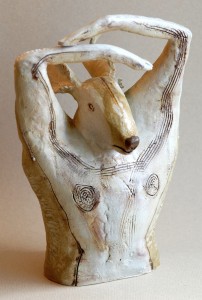
Five artists reflect on the newest state park and the Governor’s Park of the Year, the Beaver Creek State Natural Area. Mediums include oils by Sandy Roumagoux, photographs by Michael Davis and Nancy Jane Reid, drawings by Jackie Niemi, and ceramics by Liisa Rahkonan.

Beaver Creek Marsh, oil painting by Sandy Roumagoux

Root Cave Bones, pastel and charcoal drawing by Jackie Niemi.
Sky Ranch, photograph by Michael Davis.

Tules, photograph by Nancy Jane Reid.

Doe Shelter, ceramic sculpture by Liisa Rahkonen.
Posted by michael

Thursday, September 16, 2010

You Are Invited

Fun and Food offered as benefit for the Wetlands Conservancy

A fun and delicious fundraising event for The Wetlands Conservancy is scheduled for Saturday, Sept. 25, at Blue Heron Farms, an organic farm on Alsea Bay. A multi-course gourmet dinner cooked with a wood-fired pizza oven and featuring local seafoods, along with baked goods and Oregon wines will be featured. 
Local and other Oregon-based sponsors providing food for the event and donations for the silent auction include Rogue Ales, Local Ocean Seafoods, Drift Inn, Bread and Roses, Oregon Oyster, Wilder, SeaPort Air, Oregon Albacore Commission, Kettle Foods, Pacific Natural Foods, Whole Foods, Ecosystems Services LLC., Chehalem Winery, Nostrana Restaurant, Organically Grown, Springfield Creamery, Columbia Sportswear, Organic Valley, and LUSH Cosmetics.
There will also be great tour options; hiking the new Beaver Creek State Park
Natural Area, birding with experts and free kayak use. 
Folks need to buy tickets on-line as soon as possible at Wetlands Conservancy website. 
Any questions call 541-547-4097, Paul Engelmeyer, PO Box 694,Yachats, OR 97498 

Posted by michael

Wednesday, September 8, 2010

Bright Day On The Water


Bright day on Beaver Creek.  Being on the water reminds of me of how we see.  The world is composed of five movements; earth, water, air, fire, and space.  Everything else is elaboration on these movements and added complexity to satisfy our longing for knowledge.  Of course we talk and think about science and the chemical elements with their atoms listed in the periodic table.  We say that objects and beings are composed of atoms that are subject to the laws of physics and chemistry, as if this explained what we see and do.  Even further in our conceptual cave, we talk about quantum physics and the particles that make up atoms, until reaching the ultimate particles.  Then finally we move into the space-time continuum and attempt a grand unified field theory of everything.  At the end of the day, we are still in a boat, paddling up the creek, with life but a dream.

In any event, what we see and respond to are the five movements.  So paddling on Beaver Creek through a sunlit afternoon actually immerses us in the theory of everything; spontaneously and all without effort.  We do not arrive at any conclusions about the nature of the universe and we are relaxed into the rhythm of sun sparkles and waves.  This is the reality that wave-particle theory of atoms and photons aspires to.  As we feel the imposed separation of subject and object that science assumes, there is a deep emotional reaction that yearns for understanding our source and meaning.  This source is wildness and the five movements; earth, water, air, fire, and space.  By actually thinking and creating art in the forms of the five movements, we may recognize our nature.  Consider the center of a wheel.  It is undefined, yet pervades all wheels.  The center is everywhere, undefined and pervasive.  We are like this center, moving through a dream world of perceptions and images that are spokes on a wheel which becomes organized by our movements.  Deconstruction will drive you crazy with endless details.  Reconstruction will set you free, whole again.

Posted by michael

Monday, September 6, 2010

How We See

We see our visual world through reflected light in the mind.  This light can be captured and explored through photography.  By looking at the seamless boundary of object and reflection, we can see the continuum of mind, which is luminous space.  The sun appears in water as a thousand reflections (sparkles); so too colors and shapes appear in mind.  Reflections reveal our nature, as light is returned to us from objects, waking or dreaming.  We name these reflections perception, emotion, and thought.  Calmly looking, we can see that mind is not altered by its perceptions, just as mirrors are not altered by reflections.  All apparent and hidden things (this and that) arise from, rest on, and dissolve into radiant space, which remains unchanging.  Our world and us in it are reflections in the vast mirror of space, the lucid and radiant mother of all.  We are not separate from our reflections; like the sun reflected a thousand times in water is not separate from the radiant sun in space.


Posted by michael

Friday, September 3, 2010

Red Ant Hill


This is a red ant hill near our home in Beaver Creek marsh.  These ants protect our structures, as they cruise the perimeters and capture carpenter ants and termites for food.  The ants are better at pest control than human exterminators and toxic pesticides. Note the large logs (twigs) that the ants have dragged up on the nest.
The Ant and the Grasshopper
In a field one summer’s day a Grasshopper was hopping about, chirping and singing to its heart’s content. An Ant passed by, bearing along with great toil an ear of corn he was taking to the nest. “Why not come and chat with me,” said the Grasshopper, “instead of toiling and moiling in that way?” “I am helping to lay up food for the winter,” said the Ant, “and recommend you to do the same.” “Why bother about winter?” said the Grasshopper; “we have got plenty of food at present.” But the Ant went on its way and continued its toil. When the winter came the Grasshopper had no food, and found itself dying of hunger, while it saw the ants distributing every day corn and grain from the stores they had collected in the summer. Then the Grasshopper knew:        
“IT IS BEST TO PREPARE FOR THE DAYS OF NECESSITY.”  
Aesop Fable, 6th Century BC.

Posted by michael

Wednesday, September 1, 2010

Beaver Creek Natural Area Opening Date

The Beaver Creek State Natural Area officially opens on October 1, 2010.  Check in with the State Park sites for further information, Beaver Creek trail guide, and Beaver Creek birding checklist.  Looking forward to much more information from State Parks on the natural history and human history of the area.  This is a fruition of many years of community participation, planning, fundraising, acquisition, and good old fashion fun.  Congratulations to all of the people involved in the superb conservation effort that has maintained an important legacy; Beaver Creek and the marsh that flows into the Pacific Ocean, by way of Ona Beach.  

Posted by michael

Wednesday, August 25, 2010

View: Expanse Of Space


Trails are marked in the Beaver Creek State Natural Area.  There is much to explore and many vistas around hill curves;  looking out over marsh, forest, and the sea.  I walked from the entrance to the marsh on N. Beaver Creek Rd., through the marsh to the footbridge across Beaver Creek, then clockwise around the hill and up to the top of the hill.  After enjoying the view from the top of the hill, walked down and out of the park at the entrance from S. Beaver Creek Rd.  

The view is when you are at the top of your world and look out and up into space.  You are introduced to space.  Space includes everything and is the foundation for perception.  Everything rests on space.  Meditation is to decide on this recognition, that it is free and open; always available to you.  Action is to rest in this space, with all movement dissolving in timeless awareness.

We enjoy the view as we recognize the open nature of our perceptions.  We receive a big picture and relax our concepts into creative pulses of breath and heartbeats; the movement of awareness.

Posted by michael  

Sunday, August 22, 2010

Bear Makes Tracks On The Road


The recent picture shows muddy bear tracks moving along Beaver Creek Road near our home.  Bear visits us regularly.  We don't see her, as she is shy.  Bear leaves many signs.  In this picture, bear was moving through the marsh and got her feet wet and muddy before crossing the road.  ODFW has useful information about keeping bear wild and avoiding problems with bear.  This year the berry crops are not good and are mistimed because of cold weather.  Bear is out looking for food, with human interactions more prevalent.

This time of year bear comes to the lower part of our garden and climbs the garden fence.  She came a week ago.  Once inside she strips all the apples off of a tree and breaks several branches when doing it.  The tree has been severely pruned by bear over the years and keeps growing back to make good apples.  It looks more like a bush than like a tree.

Bear came two weeks ago and tried to break into a shed that we keep trash in.  She probably smelled some food wrappers.  Bear left claw marks on the shed and tore off a piece of a corner for good measure, trying to get in.  She didn't succeed.  I took the trash to the dump soon after, to discourage any further clawing.

A few years ago, bear succeeded in tearing off the whole front of our trash shed and getting at several bags of trash that were inside.  There was no garbage (food scraps) in the bags, but food wrappers are enough to tempt bear.  We were gone for several weeks to China and Tibet and I did not get a chance to take the trash to the dump before we left.  When we came back, the front of the shed was lying on the ground with claw marks all over it.  However there were no trash bags to be seen.  I said, 'Did bear take the trash to the dump?'.  I walked around and could not find any trash, except a food wrapper off in the woods behind the garden.  While we were gone, a couple of friends were checking on the place.  One day they came and found the shed destroyed and trash strewn all over the garden area.  They thought that it would be nice for us if they picked up the trash.  They are very thoughtful people.  They collected all the trash and took it to the dump for us.  How fortunate we are to have these particular friends who undid bear's mischief and cleaned up our mess.  We are deeply grateful to our friends.

In past years, bear came and dug up yellow jacket wasp nests that were built in the ground.  When I first came to this land, there were many wasp nests in the salmonberry bushes and in the ground.  When I cut trails and cleared fields, I would run across these nests and get stung.  After awhile I started to become allergic to wasps and got very good at observing and avoiding them before they saw me.  About the same time bear began to dig up wasp nests in the ground.  After a few years, wasps have all but disappeared from our land.  I have bear to thank for vigilant removal of wasps and protecting me from allergic reactions.

Bear digs up the ant nest on our land in the fall.  Bear does not bother the nest any other time of the year but seems to come to it in the fall, when it is big and full.  She is looking to fatten up for winter with extra food and is particularly interested in this nest and huckleberries on bushes surrounding the fields.

Bear likes honey.  One summer June day, I was standing on our driveway and heard a loud buzzing in the swamp east of the driveway.  I walked out through the brush and came to a large cedar tree that had a big hole in the trunk about halfway up the tree.  Bear had climbed up the tree and dug into the hole, spilling honey comb down the side of the tree and onto the ground.  The wild bees were flying around and getting used to the idea that bear had stolen much of their honey.  Apparently I had arrived at the tree shortly after bear had left with the stash.

In the spring, we see cedar trees in the forest behind our place that have been clawed by bear, seeking inner bark for eating, or marking territory (see here, here, and here).  Bear is good at finding insects.  One spring, bear came and broke our well during the insect hunt.  I used to have a heavy wooden box over the well head, that was filled with insulation so that the pipes did not freeze in the winter.  I would take the box off as the weather warmed so that I could attach a hose for watering the garden.  This particular spring, the weather got warm early, before I had removed the well box.  Ants had crawled up into the insulation and made a big nest.  Bear got wind of this situation.  I woke up one morning and turned the water on in the house and no water came out of the faucet.  I started looking around and saw that the cistern was empty.  I walked down to the well head and saw that the box had claw marks on it, was turned over, and the pipe broken off the well.  All the water had drained out of the cistern.  So I took the morning off from work and set to repairing the pipes and filling the cistern.  I got rid of the well head box and replaced the freeze protection with a simpler system.  I wrap the pipes with insulation and bubble wrap and then place a plastic garbage can over the well head.  I am sure to remove the cover and insulation before any significant spring warming so that bear is not tempted to maul the well.

So bear is our unseen companion.  We enjoy her mischief and good deeds.  Bear is trying to make a living like the rest of us.  We can make bear's live easier by removing human-made temptations and obstacles and watching her go about the business of wildness without our interference.

Posted by michael