Saturday, October 2, 2010

Park Opening Day


Opening day at the Beaver Creek State Natural Area.  On a cloudy, coastal day speakers for the dedication included:  Jean Cowen, State Representative;  Davis Moriuchi, Chair, Oregon Parks and Recreation Commission; Ted Kulongoski, Governor of Oregon; Terry Thompson, Lincoln County Commissioner; and Esther Lev, Executive Director, The Wetlands Conservancy.  Friends gathered and shared memories and aspirations.  A ribbon was cut, music from 'Coin of the Realm' enjoyed, and refreshments served.    


A big day for Beaver Creek marsh, where the people gathered and remembered the value of wetlands and wildness.  Looking forward to a bright future for Beaver Creek watershed and the plants, animals, and humans that visit and live in it.  So many people, communities, organizations, and agencies have been involved with this conservation effort, which continues forward with new acquisitions and conservation easements.  There is a heartfelt commitment to bring the legacy of wildness into the future for the benefit of all.  Thank you for this grace.

Posted by michael

Thursday, September 30, 2010

The Strange Case Of Missing Wetlands Value


Who stole the value of wetlands and when and where did this event occur?  In mythic time wetlands are regarded as important places for healing and spiritual understanding.  The garden of Eden was in a wetland surrounded by rivers in the desert.  Wetlands supplied water and food for the people through time immemorial.  Animals in wetlands supported the telling of tales, important for understanding nature.  Heron is an important messenger of the gods, bringing the connection between earth and heaven.  Frog is a symbol of birth, death, and rebirth; as she goes through changes in form, associated with wetland ponds and streams.  Many other animals and plants supply food, medicine, and cultural context for the people. 

Then along came science and the objective world; powerful conceptual grasping.  Human consciousness moved out of mythic time and into city time, with the formation of civilizations.  Eventually written language and money were invented and the science of economics developed.  The great human marketplaces grew and the connection between myth and human thought became hidden by the power of objective thought and philosophy.  We came to see every thing and person as objects separated from us as subjects.  This separation of the world between us and them produced a lasting cultural valuation based on richer and poorer.  Endless wars ensued to constantly adjust the balance of payments and power among cultures.  
Now we are in a crisis of understanding.  Great religions developed to act as gateways to the spiritual power of nature and renewal and these only served to reinforce the sense of objectivity for the people; priests separated people from spiritual power.  The objective world simply does not explain everything.  We have experiences of hope and fear that cannot be objectified or given monetary value.  There are vast areas of our consciousness that are subject to change by outside circumstances, but are not explainable by rational thought.  We do not understand the source of consciousness with birth.  We do not understand the disappearance of consciousness with death.  These events are magic, with spontaneous appearance and disappearance; something that is not consistent with rational thought and objectivity.  We are afraid of death and will not talk or think about it.   
Yet we know that when we take a walk or paddle a boat outside with the sky above and the marsh below, that we are happy and carefree.  This experience of wildness is priceless.  In our state of well-being, we cannot defend this value in court when developers argue for draining the marsh and building new value in their banks.
Have we forgotten our heritage?  Do we not see that subject and object cannot exist without each other, inseparable.  We talk about cause and effect, but don’t believe in it when we act without care for consequences.  We are nihilists at heart, mouthing words of empty value to satisfy the objectivity gods.  This separation that we feel and that has supported the polarity of human economic culture is the source of so much suffering.  We can take responsibility for our world by seeing the interface between subject and object and remembering the spiritual connection that we have with every living being and the world we live in.  This is the ultimate value, beyond the objectification of  existence.  We can declare that wetlands have value and that we are willing to conserve them and other wildness that is vital to our well-being.   
Posted by michael

Wednesday, September 29, 2010

Value of Wetlands Vegetation

Research taking place in the large wave flume at the O.H. Hinsdale Wave Research Laboratory at OSU is the first of its kind to document the response of wetland plant beds taken from coastal environments to simulated waves.  The study is designed to measure the ability for wetland plants to absorb wave energy, to survive exposure to waves, and to trap sediment for reduced erosion from wetlands.  The results of this study may be used to help determine the economic value of vegetation in wetlands and on engineered water and erosion control structures such as levees and dikes.
Dennis Albert, an Oregon State University assistant professor in the College of Agricultural Sciences and a principle investigator for the study, stated that “We’ve understood many of the values of coastal wetlands for some time, but this is one of our first opportunities to accurately measure the amount of wave energy reduction and sediment accumulation that occurs because of the plants.  Being able to quantify additional ecological services for wetlands whose value for fish and wildlife habitat is already well-documented provides further incentive to maintain and manage coastal wetlands.  Land use planning and coastal resource management benefit directly from a better understanding of the role wetlands and plant communities play in protecting our homes, communities and aquatic habitat.”
Commonly acknowledged wetland resources of value include wildlife habitat, cleaner water, less flood and erosion damage, recreation, cooler planet, and healthy economy.  While these resources are intuitively valuable, we are generally unable to assign these values, either in monetary terms or in subjective references such as spiritual, aesthetic,  cultural, and historic terms.  We take wetlands for granted, assuming that they are surplus lands that are difficult to develop, need to be drained to be productive, and don’t have much value. 
Just because we have not studied wetlands resources in much detail does not mean that they are not valuable, especially to society as a whole.  Our present appreciation of wetlands value in the Northwest will surely be enhanced by further scientific study on the coast and in the Willamette Valley and by increased education of landowners and recreation makers who have the most exposure to wetlands.  
The poor ability to assign value to wetlands can be improved by viewing value not only in monetary terms, but also in subjective terms.  While these subjective terms may not hold in a court of law, they can have powerful cultural and political influence for policy making and conservation.  When we as a society understand the importance of subjective values, aside from monetary worth, then we can enhance our cultural development and move forward as a civilization that is worthy of the name civilized.  This assignment of value will be supported by community and political will to conserve wetlands and to recognize their valuable contributions to our lives.  

It is critical that wetlands not suffer the neglect of common resources which everyone uses, and which are not taken care of because they belong to no one in particular (tragedy of the commons).  Since wetlands are poorly valued, it would appear that conservation of wetlands must come from the interest and action of private citizens and foundations, who support and fund acquisitions of lands.  These acquisitions would further persuade politicians, government agencies, and foundations to fund and support research towards defining wetland values.  Although passing laws designed to conserve wetlands is useful in the short term, laws change constantly.  Property acquisition and management is a more stable conservation method that is linked to personal responsibility through knowledge-based policies.  
Posted by michael 

Thursday, September 23, 2010

On The Occasion Of The Autumnal Equinox

The season has changed into Autumn and we witness the slow decay and death of summer life as the light angle is lowered and rain approaches.  It is a time of great leveling and return; a remembering of the equanimity of birth and death in nature.  This season is one of reflection and understanding for the power of dissolution and return to the source. 

“Whatever appearances manifest are equal as sense objects; simply what is evident to the sense faculties.  Whatever thoughts arise are equal as mental events; simply conscious states that leave no trace.  Both are equal in the moment; simply the bonds of denial or affirmation.  In actuality, they are equal in the final analysis; nothing but appearances that have no basis.  Sense objects are equal in their distinctness; upon examination simply leaving no trace.  Ordinary states of consciousness are equal in essence; upon analysis nothing but space.  Objects and mind are nondual; simply pure open space. Whoever understands things in this way is a descendent of Samantabhadra; a sublime spiritual heir of the victorious ones, a master of awareness in the highest sense."  
Longchenpa wrote these words.
Autumn is a mythical time in which we can see the dying, death, and dissolution of summer life.  We enjoy the bountiful harvest of summer’s growth and we give thanks.  From ancient times through to now, the allegory of alchemy has illustrated this cycle of birth, death, and dissolution through the seasons.  We can see this in the marsh and forest colors.  Stage 1 is Blackening, in which putrefaction occurs with reduction to pure material.  Earth and water are freed.  Stage 2 is Whitening, in which sublimation occurs with discovery of reflected inner light, the moon, water of life.  Stage 3 is Yellowing, which is a return to complete purity with direct light from the sun.  Stage 4 is Reddening, which is coagulation, a return to form.  
The cycle of seasons can be stated as processes;  Calcination-form to ash, Dissolution-ash to water, Separation-water to essence, Conjunction-essence to recombination, Fermentation-recombination to new being, Distillation-new being to increased purity, Coagulation-pure being to precipitation of new body.  These processes can occur through the evident connections of elements and qualities.  Earth is cold and dry. Water is cold and moist.  Fire is hot and dry.  Air is hot and moist.  These elements can change into each other through the qualities they have in common- cold, hot, dry, and moist -based on the primal material and awareness.  We have discounted our perceptions of elements and qualities in favor of scientific views which objectify the worlds and separate us from them.  When we stand before the marsh we see earth, water, fire, air, and space in wildness.  Why not use these metaphorical expressions to explore the inner space of awareness and the consciousness of objects that are clearly apparent; arising, remaining, and dissolving so easily, spontaneously.  Happy autumn and best wishes for an abundant harvest. 
Posted by michael

Tuesday, September 21, 2010

Beaver Creek State Natural Area Welcome Center


Views of the Beaver Creek State Natural Area Welcome Center.  There are parking spaces, trails around the center, information displays, maps of the park, video of Beaver Creek and the park, and friendly staff to greet you and answer questions.  There is a large porch with sweeping vistas of the park and shelter inside the house from our famous storms.

Posted by michael

News From Beaver Creek State Natural Area

A recent article by Lori Tobias, in The Oregonian tells us two important events for the Beaver Creek area.  On October 1, 2010, there will be a grand opening ceremony for the State Natural Area.  The ribbon cutting is at 11 am, with activities running until 1 pm, including refreshments and music at the new Welcome Center.  Parking is at Ona Beach State Park, with shuttles to the Welcome Center.  The second significant milestone is the announcement by State Parks spokesman Chris Havel, of the pending acquisition of 583 acres of timberland, adjacent to Ona Beach State Park, that will be developed over several years into a new coastal campground.  The land was planted 15 years ago as a mixed coastal forest and overlooks the lower Beaver Creek marsh, including marsh owned by Wetlands Conservancy.  This new acquisition by State Parks is an important continuing investment in the conservation of the Beaver Creek watershed.
Neighbors in the Beaver Creek valley have been nervous about all of the attention, increased visitors, and possible disruption to the beloved valley they call home.  Rumors  have confused the purpose of the State Natural Area, suggesting that it will be developed into a campground.  Such development is not a part of the Natural Area plan.  Natural Areas are set aside in a world program that aims to keep wildness available in our common heritage.  These areas are specifically reserved from development and may include trails and signs to educate and guide visitors.  In Beaver Creek, the visitor by boat leaves only footprints of ripples on the water.      
With the new State Parks land acquisition, plans for a campground should begin to emerge and show how increasing visitor traffic to the Beaver Creek area can find a temporary home without impacting the valley and its residents.  This new campground will be near the ocean, marsh, and forests; yet set aside from them in a respectful distance that invites interactions with nature.  Access to the campground will be from Hwy 101 and near Seal Rock.  While we residents value the peace, quiet, and isolation of the Beaver Creek valley, I feel that it is important to entertain visitors from around the world, so that they can experience the magic of this place and take that experience home with them, to light fires of imagination and inspiration in their lives and hearths.  We can trust in the power of nature to sooth the traveler’s spirit and to refresh their senses.  They can emerge from a paddle on the creek or a hike in the fields and forests of Beaver Creek with a renewed sense of their place in wildness and their responsibility to these places.  Wildness gives us the undefinable sense of well-being that is essential for our common survival. 
Posted by michael

Saturday, September 18, 2010

Art Inspired By Beaver Creek State Natural Area

This is a cross-post from Oregon Days of Culture of a notice for an upcoming art show at the Newport Visual Art Center, Upstairs Gallery,  opening on October 8, 2010 and running through October.


Art Inspired by Beaver Creek State Natural Area
Share
This Gallery/Museum Exhibit is a Public event
and is Free.
October 8, 2010 - 12:00 pm

This event will take place at
Newport Visual Arts Center
777 NW Beach DR
Newport, OR 97365

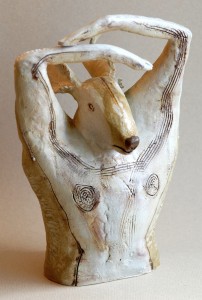
Five artists reflect on the newest state park and the Governor’s Park of the Year, the Beaver Creek State Natural Area. Mediums include oils by Sandy Roumagoux, photographs by Michael Davis and Nancy Jane Reid, drawings by Jackie Niemi, and ceramics by Liisa Rahkonan.

Beaver Creek Marsh, oil painting by Sandy Roumagoux

Root Cave Bones, pastel and charcoal drawing by Jackie Niemi.
Sky Ranch, photograph by Michael Davis.

Tules, photograph by Nancy Jane Reid.

Doe Shelter, ceramic sculpture by Liisa Rahkonen.
Posted by michael

Thursday, September 16, 2010

You Are Invited

Fun and Food offered as benefit for the Wetlands Conservancy

A fun and delicious fundraising event for The Wetlands Conservancy is scheduled for Saturday, Sept. 25, at Blue Heron Farms, an organic farm on Alsea Bay. A multi-course gourmet dinner cooked with a wood-fired pizza oven and featuring local seafoods, along with baked goods and Oregon wines will be featured. 
Local and other Oregon-based sponsors providing food for the event and donations for the silent auction include Rogue Ales, Local Ocean Seafoods, Drift Inn, Bread and Roses, Oregon Oyster, Wilder, SeaPort Air, Oregon Albacore Commission, Kettle Foods, Pacific Natural Foods, Whole Foods, Ecosystems Services LLC., Chehalem Winery, Nostrana Restaurant, Organically Grown, Springfield Creamery, Columbia Sportswear, Organic Valley, and LUSH Cosmetics.
There will also be great tour options; hiking the new Beaver Creek State Park
Natural Area, birding with experts and free kayak use. 
Folks need to buy tickets on-line as soon as possible at Wetlands Conservancy website. 
Any questions call 541-547-4097, Paul Engelmeyer, PO Box 694,Yachats, OR 97498 

Posted by michael

Wednesday, September 8, 2010

Bright Day On The Water


Bright day on Beaver Creek.  Being on the water reminds of me of how we see.  The world is composed of five movements; earth, water, air, fire, and space.  Everything else is elaboration on these movements and added complexity to satisfy our longing for knowledge.  Of course we talk and think about science and the chemical elements with their atoms listed in the periodic table.  We say that objects and beings are composed of atoms that are subject to the laws of physics and chemistry, as if this explained what we see and do.  Even further in our conceptual cave, we talk about quantum physics and the particles that make up atoms, until reaching the ultimate particles.  Then finally we move into the space-time continuum and attempt a grand unified field theory of everything.  At the end of the day, we are still in a boat, paddling up the creek, with life but a dream.

In any event, what we see and respond to are the five movements.  So paddling on Beaver Creek through a sunlit afternoon actually immerses us in the theory of everything; spontaneously and all without effort.  We do not arrive at any conclusions about the nature of the universe and we are relaxed into the rhythm of sun sparkles and waves.  This is the reality that wave-particle theory of atoms and photons aspires to.  As we feel the imposed separation of subject and object that science assumes, there is a deep emotional reaction that yearns for understanding our source and meaning.  This source is wildness and the five movements; earth, water, air, fire, and space.  By actually thinking and creating art in the forms of the five movements, we may recognize our nature.  Consider the center of a wheel.  It is undefined, yet pervades all wheels.  The center is everywhere, undefined and pervasive.  We are like this center, moving through a dream world of perceptions and images that are spokes on a wheel which becomes organized by our movements.  Deconstruction will drive you crazy with endless details.  Reconstruction will set you free, whole again.

Posted by michael

Monday, September 6, 2010

How We See

We see our visual world through reflected light in the mind.  This light can be captured and explored through photography.  By looking at the seamless boundary of object and reflection, we can see the continuum of mind, which is luminous space.  The sun appears in water as a thousand reflections (sparkles); so too colors and shapes appear in mind.  Reflections reveal our nature, as light is returned to us from objects, waking or dreaming.  We name these reflections perception, emotion, and thought.  Calmly looking, we can see that mind is not altered by its perceptions, just as mirrors are not altered by reflections.  All apparent and hidden things (this and that) arise from, rest on, and dissolve into radiant space, which remains unchanging.  Our world and us in it are reflections in the vast mirror of space, the lucid and radiant mother of all.  We are not separate from our reflections; like the sun reflected a thousand times in water is not separate from the radiant sun in space.


Posted by michael

Friday, September 3, 2010

Red Ant Hill


This is a red ant hill near our home in Beaver Creek marsh.  These ants protect our structures, as they cruise the perimeters and capture carpenter ants and termites for food.  The ants are better at pest control than human exterminators and toxic pesticides. Note the large logs (twigs) that the ants have dragged up on the nest.
The Ant and the Grasshopper
In a field one summer’s day a Grasshopper was hopping about, chirping and singing to its heart’s content. An Ant passed by, bearing along with great toil an ear of corn he was taking to the nest. “Why not come and chat with me,” said the Grasshopper, “instead of toiling and moiling in that way?” “I am helping to lay up food for the winter,” said the Ant, “and recommend you to do the same.” “Why bother about winter?” said the Grasshopper; “we have got plenty of food at present.” But the Ant went on its way and continued its toil. When the winter came the Grasshopper had no food, and found itself dying of hunger, while it saw the ants distributing every day corn and grain from the stores they had collected in the summer. Then the Grasshopper knew:        
“IT IS BEST TO PREPARE FOR THE DAYS OF NECESSITY.”  
Aesop Fable, 6th Century BC.

Posted by michael

Wednesday, September 1, 2010

Beaver Creek Natural Area Opening Date

The Beaver Creek State Natural Area officially opens on October 1, 2010.  Check in with the State Park sites for further information, Beaver Creek trail guide, and Beaver Creek birding checklist.  Looking forward to much more information from State Parks on the natural history and human history of the area.  This is a fruition of many years of community participation, planning, fundraising, acquisition, and good old fashion fun.  Congratulations to all of the people involved in the superb conservation effort that has maintained an important legacy; Beaver Creek and the marsh that flows into the Pacific Ocean, by way of Ona Beach.  

Posted by michael

Wednesday, August 25, 2010

View: Expanse Of Space


Trails are marked in the Beaver Creek State Natural Area.  There is much to explore and many vistas around hill curves;  looking out over marsh, forest, and the sea.  I walked from the entrance to the marsh on N. Beaver Creek Rd., through the marsh to the footbridge across Beaver Creek, then clockwise around the hill and up to the top of the hill.  After enjoying the view from the top of the hill, walked down and out of the park at the entrance from S. Beaver Creek Rd.  

The view is when you are at the top of your world and look out and up into space.  You are introduced to space.  Space includes everything and is the foundation for perception.  Everything rests on space.  Meditation is to decide on this recognition, that it is free and open; always available to you.  Action is to rest in this space, with all movement dissolving in timeless awareness.

We enjoy the view as we recognize the open nature of our perceptions.  We receive a big picture and relax our concepts into creative pulses of breath and heartbeats; the movement of awareness.

Posted by michael  

Sunday, August 22, 2010

Bear Makes Tracks On The Road


The recent picture shows muddy bear tracks moving along Beaver Creek Road near our home.  Bear visits us regularly.  We don't see her, as she is shy.  Bear leaves many signs.  In this picture, bear was moving through the marsh and got her feet wet and muddy before crossing the road.  ODFW has useful information about keeping bear wild and avoiding problems with bear.  This year the berry crops are not good and are mistimed because of cold weather.  Bear is out looking for food, with human interactions more prevalent.

This time of year bear comes to the lower part of our garden and climbs the garden fence.  She came a week ago.  Once inside she strips all the apples off of a tree and breaks several branches when doing it.  The tree has been severely pruned by bear over the years and keeps growing back to make good apples.  It looks more like a bush than like a tree.

Bear came two weeks ago and tried to break into a shed that we keep trash in.  She probably smelled some food wrappers.  Bear left claw marks on the shed and tore off a piece of a corner for good measure, trying to get in.  She didn't succeed.  I took the trash to the dump soon after, to discourage any further clawing.

A few years ago, bear succeeded in tearing off the whole front of our trash shed and getting at several bags of trash that were inside.  There was no garbage (food scraps) in the bags, but food wrappers are enough to tempt bear.  We were gone for several weeks to China and Tibet and I did not get a chance to take the trash to the dump before we left.  When we came back, the front of the shed was lying on the ground with claw marks all over it.  However there were no trash bags to be seen.  I said, 'Did bear take the trash to the dump?'.  I walked around and could not find any trash, except a food wrapper off in the woods behind the garden.  While we were gone, a couple of friends were checking on the place.  One day they came and found the shed destroyed and trash strewn all over the garden area.  They thought that it would be nice for us if they picked up the trash.  They are very thoughtful people.  They collected all the trash and took it to the dump for us.  How fortunate we are to have these particular friends who undid bear's mischief and cleaned up our mess.  We are deeply grateful to our friends.

In past years, bear came and dug up yellow jacket wasp nests that were built in the ground.  When I first came to this land, there were many wasp nests in the salmonberry bushes and in the ground.  When I cut trails and cleared fields, I would run across these nests and get stung.  After awhile I started to become allergic to wasps and got very good at observing and avoiding them before they saw me.  About the same time bear began to dig up wasp nests in the ground.  After a few years, wasps have all but disappeared from our land.  I have bear to thank for vigilant removal of wasps and protecting me from allergic reactions.

Bear digs up the ant nest on our land in the fall.  Bear does not bother the nest any other time of the year but seems to come to it in the fall, when it is big and full.  She is looking to fatten up for winter with extra food and is particularly interested in this nest and huckleberries on bushes surrounding the fields.

Bear likes honey.  One summer June day, I was standing on our driveway and heard a loud buzzing in the swamp east of the driveway.  I walked out through the brush and came to a large cedar tree that had a big hole in the trunk about halfway up the tree.  Bear had climbed up the tree and dug into the hole, spilling honey comb down the side of the tree and onto the ground.  The wild bees were flying around and getting used to the idea that bear had stolen much of their honey.  Apparently I had arrived at the tree shortly after bear had left with the stash.

In the spring, we see cedar trees in the forest behind our place that have been clawed by bear, seeking inner bark for eating, or marking territory (see here, here, and here).  Bear is good at finding insects.  One spring, bear came and broke our well during the insect hunt.  I used to have a heavy wooden box over the well head, that was filled with insulation so that the pipes did not freeze in the winter.  I would take the box off as the weather warmed so that I could attach a hose for watering the garden.  This particular spring, the weather got warm early, before I had removed the well box.  Ants had crawled up into the insulation and made a big nest.  Bear got wind of this situation.  I woke up one morning and turned the water on in the house and no water came out of the faucet.  I started looking around and saw that the cistern was empty.  I walked down to the well head and saw that the box had claw marks on it, was turned over, and the pipe broken off the well.  All the water had drained out of the cistern.  So I took the morning off from work and set to repairing the pipes and filling the cistern.  I got rid of the well head box and replaced the freeze protection with a simpler system.  I wrap the pipes with insulation and bubble wrap and then place a plastic garbage can over the well head.  I am sure to remove the cover and insulation before any significant spring warming so that bear is not tempted to maul the well.

So bear is our unseen companion.  We enjoy her mischief and good deeds.  Bear is trying to make a living like the rest of us.  We can make bear's live easier by removing human-made temptations and obstacles and watching her go about the business of wildness without our interference.

Posted by michael

Friday, August 20, 2010

The Story Of Fog Woman (How Salmon Came Into The Rivers)

Raven and his two slaves were fishing but caught only bullhead fish.  When fog came up, they began paddling back to the camp.  Suddenly a young woman appeared in the canoe.  She was Fog Woman, the daughter of Chief Fog on the Salmon.  Raven married her.
Fog Woman was skilled at basket making and made a finely woven, watertight basket of spruce root.  Raven complemented her on it.  ‘Watch what it can do’, she said.  She dipped her hands into the fresh water in the basket and brought out a large salmon.  Fog Woman dipped her hands into the basket daily, and fished out a salmon.  Soon the fish drying rack was filled with rows and rows of dried and smoked salmon and the storehouse was full. 
Raven boasted about all the salmon he had and this annoyed his wife.  They quarreled fiercely and eventually Raven hit Fog Woman with a dried salmon.  She ran out of the house and down to the beach, followed by her husband, who reached out to grab her.   
But as he did so, she turned into fog.  Then all the dried and smoked salmon left the storehouse and the racks and followed her into the sea, leaving Raven holding a useless bullhead.  
Nowadays it is Fog Woman’s daughter, Creek Woman, who lives at the head of every stream, and it is she who brings the salmon back up the streams from the sea every year.
Quoted from “Native Americans: the indigenous peoples of North America” by Fiona Reynoldson, 2000.
Posted by michael  

Thursday, August 19, 2010

Beaver Creek Water Quality: What Is That Green In The Water?


Update; picture taken of Beaver Creek from South Beaver Creek Rd. bridge on August 24, 2010. The green bloom is back in the creek.  Something is going on with Beaver Creek water quality and it changes quickly.

The other day while kayaking on lower Beaver Creek, I noticed that the water was bright green and turbid in several reaches of the creek.  This particular color is familiar to me from seeing algal blooms in lakes.  A few days later the green was gone and the creek had returned to its normal summer color and clarity.  In the summer when creek flow is low, the possibility for algal blooms in the lower creek is increased.  The creek water has a longer residence time, allowing algae to concentrate and form blooms.  Sunlight increases and water temperature can warm.  Then algae can bloom as they are not washed out into the ocean.  Is this algal bloom harmful for fish and their food?  It depends.  If the bloom leads to lowered oxygen in the water, especially during night time, then fish kills can occur.  Otherwise, the bloom may supply needed food for feeding fish and their prey.  There are no simple answers.  We look for obvious signs, such as fish kills to determine harm, but sublethal effects such as stressed fish are also possible.  These stress effects are more difficult to see.
So I looked at data sources to see if Beaver Creek has been identified as having water quality problems.  The Oregon Department of Environmental Quality (DEQ) keeps a database for problem waterways.  Problem waterways are defined under 303(d) listing as having abnormal and harmful levels of any of these factors: sediment; bacteria; temperature; dissolved oxygen; nutrients; weeds or algae; chlorophyll a; pH; and toxins.  Once a waterway is 303(d) listed, it may be subject to formulation of Total Maximum Daily Load (TMDL) analysis and management to remediate problems.
Beaver Creek is not 303(d) listed by DEQ.  Recent monitoring (2006-2008) by the Lincoln Soil and Water Conservation District (LSWCD) often showed, especially in the summer, that bacteria were elevated and oxygen, oxygen saturation, and pH were decreased to 303(d) water quality violation levels.  We do not know historical patterns of Beaver Creek water quality, so baseline comparisons are not possible.  These data are warning signs that Beaver Creek water quality could be improved before larger problems develop.
Historically (past 100 years) the creek and watershed have been influenced by fires, wildlife, and humans through forestry, livestock and crop farming, septic systems, fishing, road building, and recreation.  The creek produces healthy runs of coho, cutthroat trout, and steelhead.  Beaver Creek appears to be a robust system that has large potential to heal itself from the effects of natural and human-induced perturbations.  Clearly, the past pioneers and present residents of the Beaver Creek watershed have been good stewards of their lands and there is room for improvement, as indicated by 303(d) water quality criteria.  The strength of the Beaver Creek watershed suggests that improvement measures will result in positive results.  
Suggestions for improvement of fish spawning habitat, especially in forested areas, have been outlined in a watershed analysis by the Siuslaw National Forest.  Steps for improvement of farmed areas have been outlined in a report by LSWCD entitled Mid Coast Agricultural Water Quality Management Area Plan.  Changes in forestry and agricultural practices to improve water quality are based on voluntary and cooperative efforts, with the financial aid of grants.  The management plans make suggestions and landowners, government and private, may follow them according to their motivation and ability, in an effort to adhere to water quality guidelines.
How can Beaver Creek water quality be improved and who is responsible?  Following the LSWCD management plan we see five sub-sections for potential concern.  These include: near-stream management areas; nutrients and bacteria; fine sediment; irrigation water management; and pesticides.  Prevention and management of pollution from agricultural and forestry activities in the Mid Coast Agricultural Water Quality Management Area is administered by the Oregon Department of Agriculture through Oregon Administrative Rules (OAR) 603-095-2200, 2220, 2224, 2240, and 2260. The land owners are responsible for their own activities and not responsible for the activities of other land owners, conditions that exceed 25 year, 24 hour storm events (flooding), or other exceptional circumstances.  Site-specific conditions are important for improvement measures and the owner’s knowledge and judgement is of primary importance.  Access to waterways by livestock is allowed for steam crossings and watering as long as riparian vegetation is maintained.  Owners are not responsible for the effects of wildlife on riparian vegetation.  Examples of recent management actions in Lincoln County are given in this report.
The LSWCD management plan recognizes several common-sense activities for waterway improvement.  Consult the plan for details.  Prevention and Control includes voluntary measures to keep waterways within the the bounds of 303(d) water quality criteria.  Riparian Areas and Streams includes fencing, off-stream livestock watering, rotational grazing, livestock exclusion, planting riparian vegetation, and in-stream structures.  Nutrient and Manure Management includes controlled field manure applications, manure storage in covered and contained areas away from streams, limit livestock access to saturated soils, cover heavy traffic areas with sand or rock, and site barns and slaughter areas away from streams to isolate and manage leachate.  Erosion and Sediment Control includes livestock rotation to maintain vegetation, control of runoff by diversion, maintain riparian vegetation, and plant cover crops in fields.  Management of Pesticides includes follow label instructions, use more integrated pest management, insure containment of mixing and spilling of pesticides and petroleum products.


Next time you are out on a waterway, take a moment to appreciate all of the hard effort, common sense, and responsibility that farmers, foresters, fishers, and recreation makers posses in their efforts to make a living, feed people, and conserve valuable ecosystems that support all of us.  When an ecosystem is degraded, our responsibility is to support positive repair efforts and return to a healthy state of wildness in collaboration with farmers, foresters, and fishers.  Together, we make good neighbors, strong communities, and healthy economies.  

Posted by michael

Tuesday, August 17, 2010

A Story About Vitality: How I Learned To See the Whole Animal

This story illustrates the power of standing back from the mechanistic details of an animal (chemistry, physiology, cellular anatomy) to see the whole animal and understand how it relates to the surrounding world.  Animal responses reflect their life force, which is called vitality.  Vitality is something we all sense and know, have difficulty measuring, and cannot capture and put into a bottle for study or consumption.  Vitality is not a substance that can be reduced to a mechanistic explanation.  It is a feeling of well-being and responsiveness that is diminished when we are stressed or sick.  Stress is something that we are all concerned with because it is associated with disease and mortality.  Stress effects can be measured by internal changes in blood or brain chemistry, heart rate, or metabolism.  But these changes are not directly seen and responded to by other animals, which can be food or threats to survival.  Eventually we all die when our vitality is gone.    
Perhaps vitality can be measured using whole-animal responses.  These responses are called behavior.  When animals are stressed or sick, they respond with impaired behavior.  Voluntary behavior is adaptive and changes in response to internal motivation and state (fear, hunger, avoidance, attraction, stress, disease) and to external factors (light, temperature, hypoxia, food, threat).  Because voluntary behavior responds simultaneously to so many types of factors, some of which are not associated with stress, it is not expected to predict disease or mortality.  Involuntary behaviors are reflex actions (orientation, gag, startle) and these are fixed.  They either respond or not to a stimulus and this response is modified by the level of vitality that an animal has.  Reflex actions can be used to measure and predict stress, disease, and eventual mortality.  Anyone can measure reflex actions and these measurements are a simple and cheap way to understand vitality and our impact on other animals.
In my life as a scientist, I studied fish stress and mortality.  There are many ways to research this subject.  They involve developing hypotheses about the effects of stressors.  Examples of stressors are temperature, hypoxia, and wounding from capture.  Then experiments are designed to test for these effects by exposing fish to stressors and measuring resulting changes in markers for stress.  If you want to understand how these changes affect fish disease and mortality, then fish must be held  for days after stress induction to monitor their condition.  These results are then used to test the original hypotheses and try to understand and predict future stress and mortality in fish.  
Through the course of this research, it became clear that there was not a 1:1 correspondence between stressors and their effects.  We could not reliably predict disease and mortality by measuring physiology or volitional behavior.  One day after many experiments, I was standing beside a tank of fish that had been stressed from exposure to higher temperature, similar to their exposure after capture in cold water and being brought to the surface in warm water.  I noticed that the fish were lethargic, disoriented, and did not have a startle response.  Later I wanted to measure body core temperature of fish exposed to warm water.  I didn’t have any fancy instruments so I simply inserted a thermometer through the mouth and throat, into the gut.  When I did this for fish that were not stressed, they quickly responded by gagging and I noted that this method would not be a good one to use.  I also wondered how a fish that had been exposed to warm water would react.  I placed a thermometer in the throat of a fish stressed by warm water and discovered two things.  First, they had warmed and second, they did not gag in response to the thermometer.
The observations of diminished reflex actions; lack of orientation, startle response, and gag response seemed important for understanding stress and mortality.  Suddenly I had a compelling thought and hypothesis.  Could it be that involuntary reflex responses had a 1:1 correspondence with stress and mortality in fish?  The short answer is yes, stress and mortality can be predicted by measuring reflex impairment.  There are many reasons that this is true and you can read the research paper for those details.
By looking at the whole animal instead of it’s internal details, “seeing the forest for the trees”, I was able to see vitality.  Sometimes the details of a subject obscure the understanding of that subject.  It is refreshing to stand back and take in the view, the big picture.  This is the power of wildness.  When we experience nature, we directly see the nature of ourselves, others, and surrounding space without the bias of thought and interpretation.  We have an involuntary response (reflex) to nature that supports our vitality and well-being.
Posted by michael

Friday, August 13, 2010

Herbal Medicine: What Is It?

The study of plant life and herbs teaches us to see humans as part of nature.  As we interact with plants and nature, our healing obtains.  Herbal medicine is a clinical modality based on using plant medicines as therapeutic tools.  Herbal medicine moves beyond the blind repetition of information in older herbals into a modern understanding of molecular vitality.  Herbs are not drugs and herbal medicine is not based on the pathology-disease reductionist model of modern pharmacological medicine.  Herbal medicine supports body function and tone and is based on the healing properties of the vital force.  We all know what the vital force is and when it is present, but we cannot see it or capture it in a bottle.  Vitality escapes reductionist methods.
Some excellent manuals for understanding herbs and their actions were written by Michael Moore.  Herbs are exogenous agents that cause the body to react through stimulation or suppression of body functions.  Herbal medicine tones the body, which then performs healing functions through vitality.  This approach is similar to the approach used in Traditional Chinese Medicine (TCM) and Ayurvedic systems.  The process in these healing systems is to diagnose excesses or deficiencies of body function and then tone body systems, including organs, stress response, and fluid transport.  The principle of vitalism is to strengthen the person, then treat the problem.
A different conceptual expression of vitalism in herbal medicine was given by J. Treasure, in which there are three groups: food; medicine; and poison.  Food and medicine are passive and interconnected.  They are ingested and acted upon by the body.  They are used with traditional knowledge and evidence of their efficacy is measured by their widespread use and influence on vital force and toning the body.  Poisons are active.  They are ingested and act on the body.  Pharmaceutical drugs are this type and their efficacy is measured by influence on symptoms of disease in clinical trials.  Poisons are the model substance in modern pharmaceutical medicine.
Herbs are not drugs and are not naturally occurring analogs for pharmaceuticals.  Their actions cannot be reduced to the effects of their isolated active constituents.  Stronger acting herbs may be drug-like in action, but are rare.  Herbs have dozens of different compounds that form a matrix which modifies the actions of any specific active constituents.  Herbalists view the whole (vitality) as greater than the sum of the parts.  This is vitalism, which corresponds to modern systems theory in ecosystem science.  
Drugs have specific actions on the body, with side effects of undesired actions.  Herbs have several broad actions on a number of body systems and their actions are complementary or synergistic, with few side effects.  The use of herbs does not involve drug actions or adverse effects.  Instead herbs have contraindications when imbalance between metabolic and systematic constitution and the herb is noticed.  Any use of herbal medicine should carefully consider contraindications as defined by competent herbalists.  Furthermore, mixing of herbal medicine and pharmaceutical drugs should only be done with the full knowledge of the drug-prescribing doctor, as herbs can have agonistic or potentiating interactions with drugs.
Clinical research on plant effects favors isolation of individual compounds.  These clinical trials are not appropriate for the investigation of herb action, as they assume drug action, which does not apply to herbal medicine.  Few methods exist for researching the effects of whole plants and their preparations.  Herbal medicine effects occur gently, over time, outside of the context of rapidly acting phytopharmaceuticals.  The present disinformation on supposed negative effects and lack of efficacy for herbs is a result of applying inappropriate research methods to their properties.  New research methods will need to be developed to resolve these questions.  Funding for these methods is limited because of the present inherent bias of laws, medical politics, and ideology against herbal medicine.  The medical-pharmaceutical industrial complex cannot make money off of herbs and the vital force within humans and will do whatever is necessary to suppress herbal medicine.   
Posted by michael